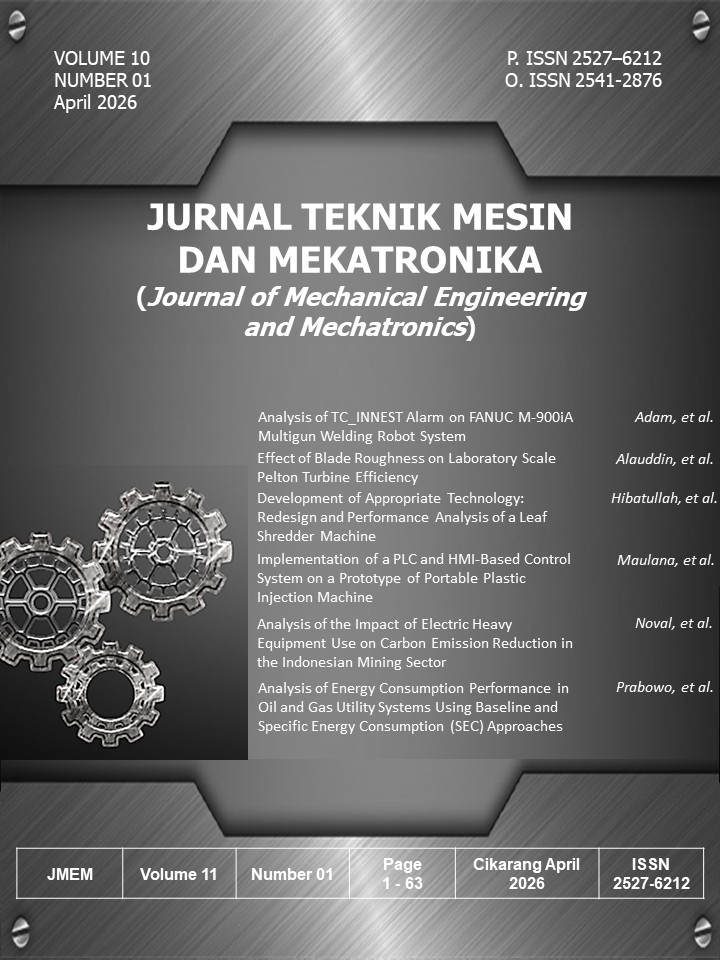
Analysis of the Impact of Electric Heavy Equipment Use on Carbon Emission Reduction in the Indonesian Mining Sector
Keywords:
Electric heavy equipment, mining electrification, carbon reduction, energy transition, sustainabilityAbstract
Indonesia’s mining sector contributes significantly to national carbon emissions, primarily due to the intensive use of diesel-powered heavy equipment. Electrification of heavy machinery is increasingly viewed as a strategic approach to achieve the national Net Zero Emission (NZE) 2060 target. This paper presents a technical and environmental assessment of the carbon emission reduction potential achieved through the adoption of electric heavy equipment in mining operations. Using simulation-based modeling and comparative analysis of diesel versus electric energy consumption, this study quantifies the CO₂ reduction potential, energy cost savings, and return on investment. Results show that replacing a fleet of 100 diesel excavators with electric equivalents could reduce emissions by 15,800 tons CO₂ annually, corresponding to a 68% reduction compared to baseline conditions. The study concludes that large-scale electrification of mining equipment could play a pivotal role in Indonesia’s decarbonization roadmap, provided that renewable power integration and infrastructure readiness are improved
Downloads
Published
Issue
Section
License
Copyright (c) 2026 Jurnal Teknik Mesin dan Mekatronika (Journal of Mechanical Engineering and Mechatronics)

This work is licensed under a Creative Commons Attribution 4.0 International License.